Mali Banks and Microfinance: Using AI Without Exposing Clients
Banks and microfinance institutions in Mali are adopting generative AI. WAMU secrecy, Law 2013-015, the APDP: risky habits and a practical five-step plan.
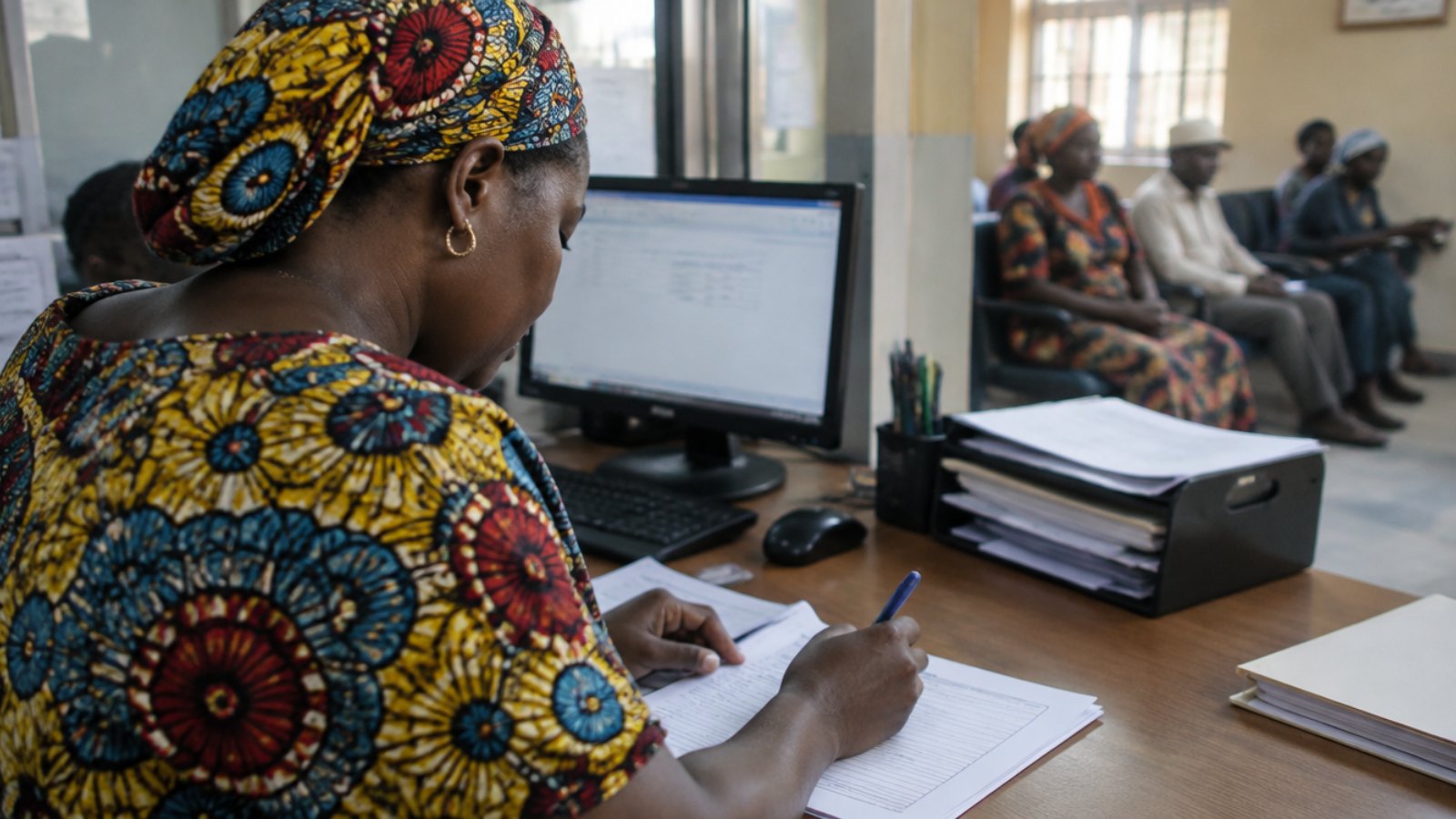
In a microfinance branch in Bamako, a loan officer has to prepare the file of a trader who wants a loan to expand her market stall. He has her savings statements, a copy of her ID card and the opinion of her solidarity group. To move faster, he pastes everything into an AI assistant and asks for a summary note for the credit committee. He saves twenty minutes. But the client's data has just left Mali.
Banks and decentralized financial systems (SFDs, the microfinance institutions of the region) are starting to use generative AI, often without any framework. This article offers a practical approach, suited to their reality and to the rules that apply to them.
A sector at the heart of financial inclusion
Microfinance plays a central role in Mali. According to the professional association of Malian SFDs (Apsfd-Mali), the country had 116 SFDs at 31 December 2024, with about 1.58 million clients, 158 billion CFA francs in deposits and 191 billion in loans. In September 2025, the Ministry of Economy and Finance announced that a new law was being prepared to better protect depositors.
Banks, for their part, serve companies, civil servants and a growing share of individuals. In both cases, these institutions hold very sensitive information about their clients: income, savings, debts, collateral, family.
Three layers of rules
A Malian financial institution that uses AI must take three frameworks into account:
WAMU regulation, under the supervision of the BCEAO and the Banking Commission, which among other things imposes professional secrecy on banks and their staff.
SFD regulation, which sets the governance and control rules specific to microfinance.
Law No. 2013-015 of 21 May 2013, amended in 2017, which protects personal data and entrusts its oversight to the Autorité de Protection des Données à caractère Personnel (APDP).
This law only allows data transfers to another country if that country offers a sufficient level of protection. Yet most consumer AI assistants process data outside Africa. For details of the framework and the sovereignty issues, read our article on Law 2013-015, the APDP and data sovereignty.
An authority that inspects
The APDP is not a paper authority. In 2025, it fined a Bamako clinic 5 million CFA francs for obstructing an inspection. In October 2025, it opened a special session to review about 2,000 declaration files, checking in particular the security of information systems. For a bank or an SFD, the use of AI on customer data is therefore one of the topics an inspection can cover.

Risky habits at the counter and at head office
In a bank or a microfinance institution, the most exposed uses are rarely exotic:
summarizing a loan file with identity, income and collateral;
drafting a reminder letter to a client who is behind on payments;
analyzing a loan portfolio exported from Excel to prepare a report;
translating an internal procedure that uses client names as examples;
submitting a list of suspicious transactions to draft a compliance note.
Each of these actions can both breach professional secrecy and amount to a data transfer outside Mali. The mechanism is explained in Anatomy of an AI data leak.
The five-step approach
Observe for two to three weeks which AI tools are actually used, branch by branch, including on phones.
Classify data into three levels: free (public texts, blank templates), to be anonymized (names, amounts, account numbers), forbidden (ID documents, suspicious transaction reports, health data).
Write a one-page rule, approved by management and compliance, then explain it in branch meetings rather than by a simple email.
Update the declarations filed with the APDP for processing that involves AI, and inform the board.
Protect data automatically before it is sent and keep a record of incidents avoided.
To plan these steps over time, our 90-day rollout playbook offers a week-by-week schedule.
Small institutions too
A rural savings bank with three staff members has no security officer. That is exactly where the risk is highest, because free tools are the easiest option. For these institutions, awareness alone is not enough, as we explain in Why AI security training doesn't work. They need a safeguard that acts at the moment data leaves, without asking the employee for technical expertise.
What ZeusLock brings
ZeusLock runs on employees' computers and browsers, at head office as well as in branches. It detects names, account numbers, amounts and ID documents in real time in the prompts and files sent to ChatGPT, Copilot, Gemini or Claude. Depending on your rules, it anonymizes them while preserving their format, warns the user or blocks the upload. The loan officer gets his summary note, but the client's real identity stays inside the institution. Every event is logged for the APDP, the Banking Commission and the auditors.
In short
In Mali, banks and SFDs hold data covered both by WAMU professional secrecy and by Law 2013-015. Generative AI can save precious time, provided you know what leaves and protect data before it is sent. A simple five-step approach is enough to get started.
Do you run a bank or a microfinance institution in Mali? Request a ZeusLock demo.
Protect your data from AI leaks
See ZeusLock stop sensitive data before it reaches ChatGPT, Claude, Gemini and more, in a 30-minute demo.